
How Is Crypto Taxed? (2025) IRS Rules and How to File
Wondering how crypto taxes work and how to report cryptocurrency on your taxes? Our experienced crypto accountants have your answers!

Let’s face it, taxes are complicated. And the IRS often takes advantage of everyday people’s lack of legal knowledge to collect more money from an audit.
But here’s the good news: You have the right to hire an attorney who can negotiate with the IRS, keep the audit from escalating, and potentially lower your bill by thousands or even millions of dollars.
Here are the most important things to know if you’re undergoing a cryptocurrency audit.
Have more questions?
Whether you’re being audited because of your crypto, or your investments are simply complicating the process, the goal is to prove that you filed your tax returns correctly and paid the correct amount.
Here’s how the cryptocurrency audit process works:
Common triggers for a cryptocurrency audit include:
Many digital asset exchanges report some information about your activity to the IRS. If your tax return doesn’t match, you could get flagged. This is true even if you lost money or made minimal gains.
Once the IRS starts receiving Form 1099-DA from crypto exchanges, we expect that cryptocurrency audits will skyrocket.
A standard audit covers your last 3 years of tax returns. However, during the audit process, if the IRS finds reason to believe you’ve underreported by at least 25%, they can go back 6 years.
If you’ve had crypto for several years and haven’t always reported it properly, there’s a good chance of this happening to you.
For example, let’s say you’re going through a crypto audit covering the years of 2017, 2018, and 2019. When the IRS examiner looks at your records for 2017, they notice that some coins were sold. They ask when you first acquired those coins, and you tell them you bought the coins in 2014.
If you didn’t report any cryptocurrency before 2017, the IRS examiner may now have reason to believe that you’ve significantly underreported your taxable income. The years of 2014, 2015, and 2016 may then be opened up to an audit, as well.
If the IRS believes you’ve committed tax fraud, there is no statute of limitations for the audit. They can go back as far as they want in that case.
As we mentioned above, most IRS examiners don’t even know what Bitcoin is—let alone how it should be reported. You need a tax lawyer on your side who:
A crypto tax report is a detailed accounting of every single trade—including timestamps of when you bought and sold, the initial amount you spent on the coin, and how much you sold it for. This information is used to calculate your capital gain or loss for each transaction.
There are other factors to consider, too: Long-term gains and short-term gains are taxed at different rates. Some crypto is counted as income and must be reported separately.
Building a proper crypto tax report can be a painstaking, time consuming process. Do not assume the IRS will put in the work to calculate the correct amount owed for you!
We’ve helped hundreds of clients create crypto tax reports for past years, even if they don’t have complete records or have lost access to old wallets. We know the law inside and out, so we can create crypto tax reports that hold up to the most stringent IRS examination.
Many of our crypto clients haven’t reported because they’re afraid they won’t be able to pay the taxes they owe on crypto gains.
What most people don’t realize is that the audit process is only concerned with calculating the amount you owe. You do not have to pay your full tax bill immediately after the cryptocurrency audit is complete.
You can create a payment plan with the IRS. There’s virtually always a payment plan or resolution option that works for our clients and satisfies the IRS.
You can even appeal your crypto audit results! Our tax attorneys are licensed in US Tax Court, so we can appeal your audit decision to the highest levels.
Did you receive notice of a cryptocurrency audit? Worried you could get in trouble because you haven’t fully reported your crypto in past years? We’re here to help.
A crypto tax audit is similar to any other type of IRS audit—except your local IRS examiner may not know the first thing about cryptocurrency.
Virtual currency is taxed differently than fiat and requires painstaking calculations to report correctly. The IRS views crypto as property, not currency, which means that mining, selling, exchanging, or spending your coins are all taxable events that you need to report.
Read up on how cryptocurrency and Bitcoin taxes work if you need a refresher.

Wondering how crypto taxes work and how to report cryptocurrency on your taxes? Our experienced crypto accountants have your answers!


Navigating a tax audit can seem intimidating, but it doesn’t have to be a stressful ordeal. With the right knowledge and preparation, anyone can handle this process smoothly.
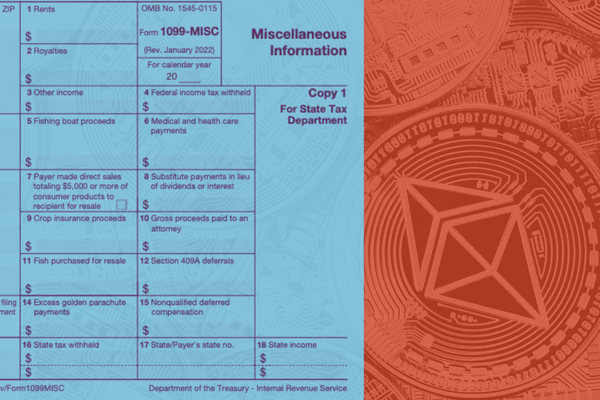
Confused about crypto staking taxes? Our crypto accountants are here to help! Learn how to report staking rewards on your tax return.

Are you getting error messages in your cryptocurrency tax software? Do the numbers seem way off? Don’t give up hope! Here are